Ecuador: Galapagos Islands – Isla Floreana

Although Santa or his reindeer (or their proxy the marine iguanas) did not find us to leave presents when we woke up on Christmas morning; our Christmas present came in the form of amazing wildlife.

Our first stop for the day was Post Office Bay which dates back to the 18th Century where British and American whalers would pick up post for those close to their destination. Reflecting today’s visitor demographics of the Galapagos, the majority of the postcards that we saw was for the US. Across the group, we picked up about 6 to deliver in Sydney, Melbourne, UK and Canada. The instruction given to us by our guide was that it had to be hand-delivered and accompanied by wine and cheese…. So if your name is Anna-lea and you live in Sylvania, I will be coming by in the next 6 months.

Floreana was the site of two failed tuna canning factories, firstly by Norwegians then by Japanese, with all that remains today being a few rusted bits of metal. With the only fresh water on the other side of the island, it is unsurprising that both ventures failed.

On our first snorkel, we managed to see and follow a number of sea turtles, a few different schools of fish and a spotted eagle ray. Our second snorkel just on the other side of the beach seemed to have a lot less seaweed and wildlife. We were lucky to see a sting ray, a sea turtle despite significantly less fish. Highlighting the importance of ocean currents to attract nutrients leading to greater marine life.

On the way to Punta Cormorant, we passed by a lagoon with several dozen adult flamingos scattered across the lake and close to us a nursery group of baby flamingos, protected by a few adults resting among them. From a distance, the young flamingos look the same size as the adults and are only distinguished by their light grey feathers.

Punta Cormorant should otherwise be called postcard Galapagos, a fine sand beach with least 15 sea turtles and sting rays off the beach. The female sea turtles were waiting in the water to wait for sunset to come onshore to lay their eggs. The beach was dotted with nest sites above the high-tide mark.

Our final snorkel of the day was off the beach closest to Devil’s Crown; where I accidentally missed the two sharks that were swimming amongst us. Luckily due to other group member’s wildlife spotting ability, I was able to follow a sea turtle and saw a sea horse which was amazingly camouflaged amongst the seaweed on the sea floor.

Our sail to Isla Santa Cruz Puerta Ayora was especially memorable as our boat was unexpectedly chased by dolphins and the cloud cover resulted in a most spectacular sunset.

Travel date: 25 December 2018

Ecuador: Galapagos Islands – Isla Santa Fé and Isla Plaza Sur

Arriving at white sandy beach on Isla Santa Fe, we were greeted by the sound of sea lions calling out to each other whilst frolicking in the shallows amongst the rocks. As usual, the antics of the sea lions caught all of our attention with a combination of phones, small and SLR cameras all aimed at different groups to try to capture their individual behaviours.

One of the consequences of the weather was the debris that washed up onto a normally pristine beach, which had the whole group of scouring among the twigs and shells for bits of plastic and other refuse to remove off the island.

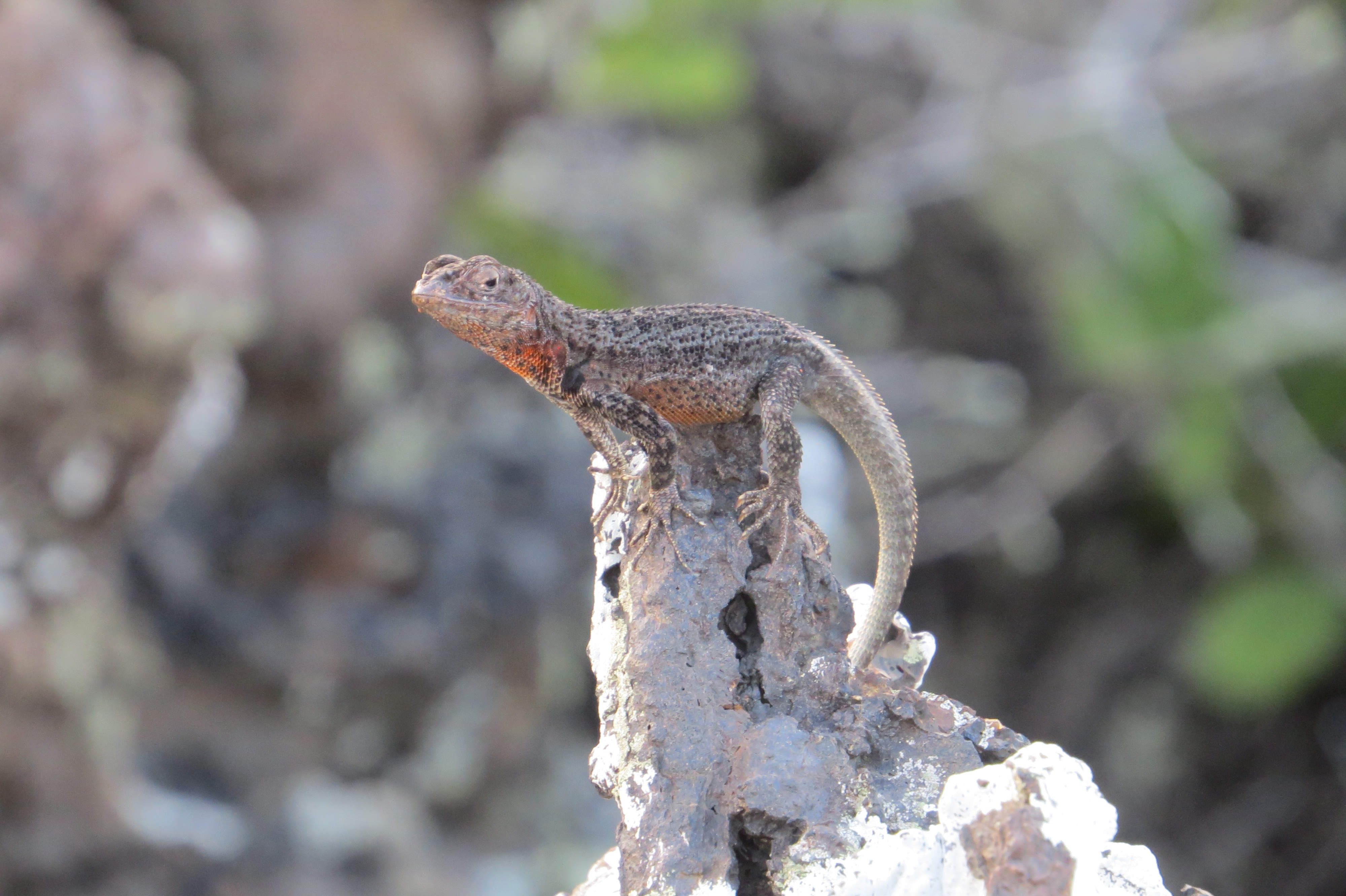
The walk away from the beach took us into opuntia cacti country, where yellow tinged land iguanas co-exists with sea lions and lava lizards. The presence of cacti set against a beautiful blue sea with iguanas and sea lions was not something that I expected before coming to the Galapagos. In the distance we spotted two blue-footed boobies who were clinging to the rocks and showing off their bright blue feet – one of the iconic animals of the Galapagos.

We spent the afternoon on Plaza Sur, although small at only 0.13 square kilometres in area; there was a strong concentration of opuntia cacti which seemed to be shorter than those on Isla Santa Fe. On the trail, we saw the sea lions of the ‘Gentleman’s Club’ who are not the dominant male and each seemed to have their own patch on the cliff top with a stunning view of the sea below. The walk up probably took us about 20 minutes on foot, I wonder how long the sea lion would have taken either by sea or by land. We also spotted red-billed tropic birds, nesting red footed and Nazca boobies and sea lions all nursing their young.

The journey to the next island was a rough one with the boat seeming to hit the top of the waves and bounce upon each wave, luckily I managed to stay in bed and sleep despite the sound of the engine and the movement unlike our guide (who managed to fall out of the bed twice!)

Travel date: 27 December 2018
Ecuador: Galapagos Islands – Isla Santa Cruz

Directly off the pier we were greeted by the now regular sight of sea lions on benches intended of people and black tipped reef sharks swimming off the jetty.

The fish market at Puerto Ayora was unlike anything I have ever seen, a persistent sea lion had their nose right next to the where the fish monger was cutting up the fish, poised for any scraps that may slide off…. What the sea lion did not eat was cleaned up by a group of pelicans who were waiting in the wings. The lobsters and fish on sale are all caught by local fisherman on a line rather than nets to prevent over-fishing.

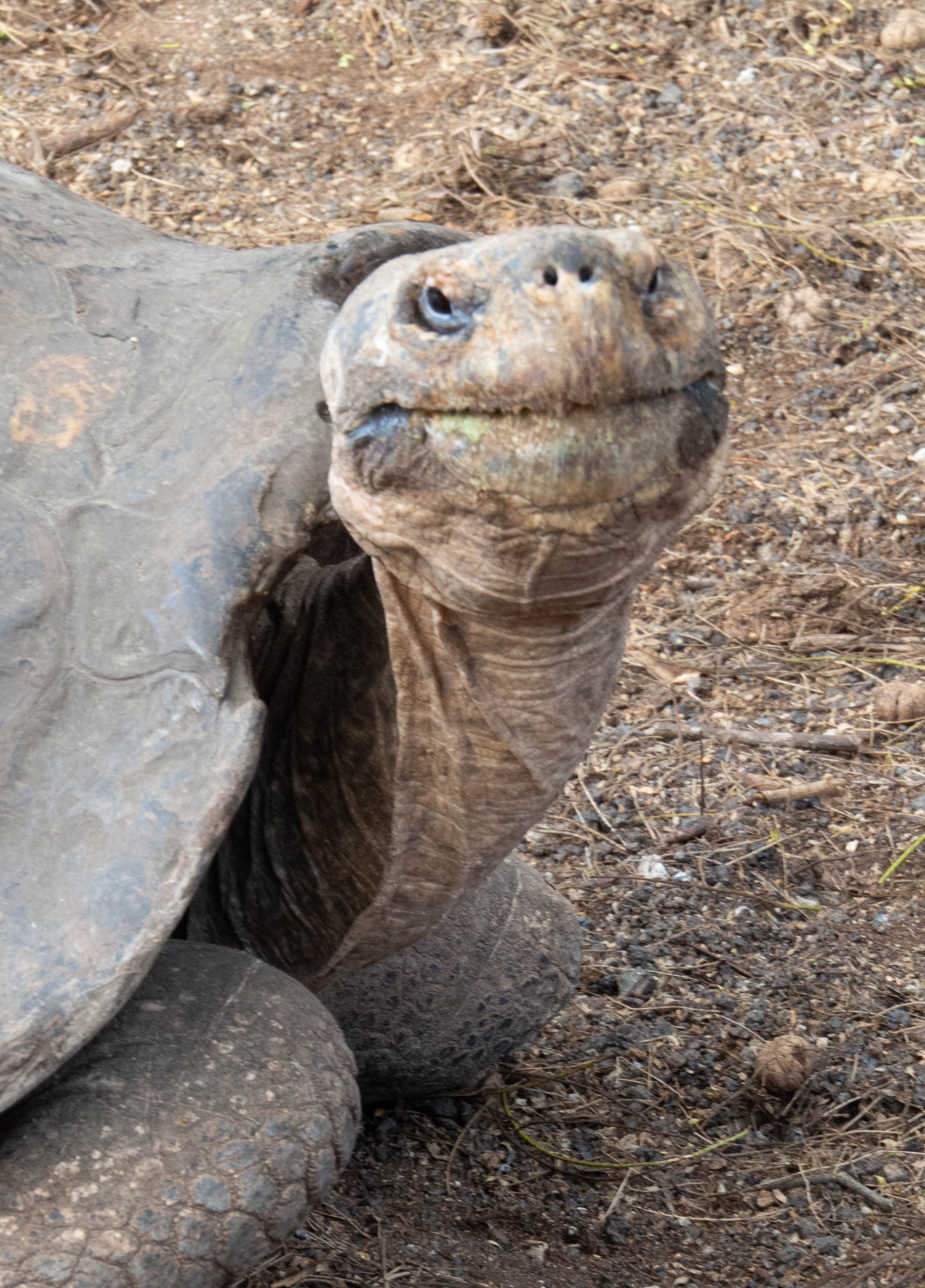
The Darwin research station has a number of interesting projects, the main one being the breeding of giant tortoises, where they raise adults as well as baby tortoises before they are returned to the wild. Another interesting project is the eradication of wasps which are caught using a solution of water, sugar and detergent. There was an dedicated climate controlled pavillion to view the taxidermied remains of the famous giant tortoise – Lonesome George who died in 2012 the last of his sub-species.  Although a little light on the explanations of the environment and animals it was still a worthwhile visit.

We had the opportunity to visit Rancho El Manzanillo, in the highlands of Isla Santa Cruz, luckily we were well equipped with waterproofs as the rain and vegetation made the supplied gum boots the best option to get around. We were able to see giant tortoises in what is close to their natural habitat, they exhale and retreat into their shell if you came too close to them. Their seemed to be quite a lot more active than those at the Darwin Station and could cover quite a lot of distance should they be required to.

That evening we received a tsunami warning, as a result of the earthquake in Tonga (11,966.87 kilometres or 7,435.87 miles away),  the captain left the boat to get a briefing from the port authority and we were requested to leave the harbour at 4.30 in the morning; the pulling of the anchor and the engines managed to wake all the passengers up. Luckily, the only impact on us was the larger than normal swell.

Travel date: 26 December 2018

Ecuador: Galapagos Islands – Isla Espanola

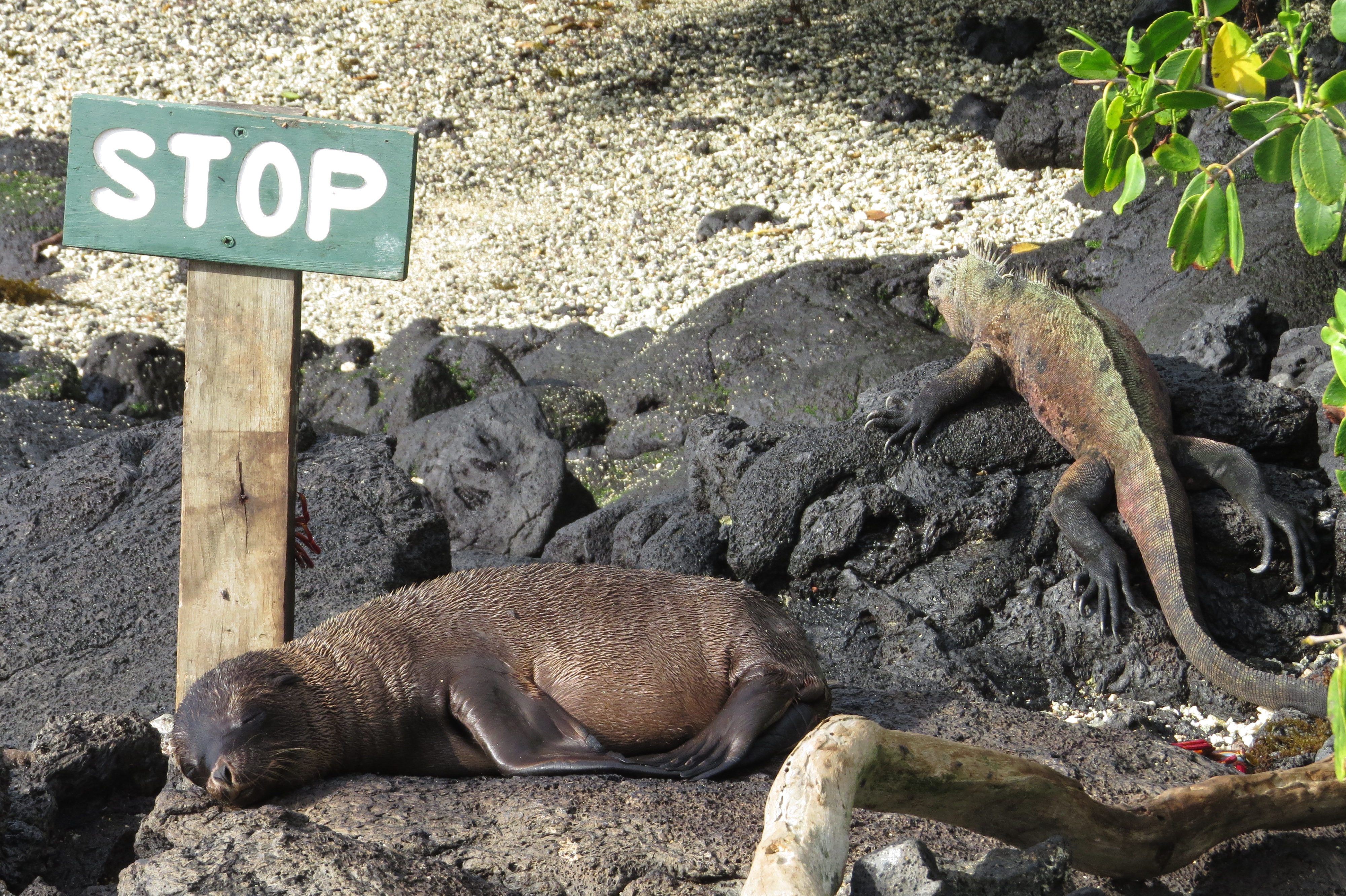
Landing on Isla Espanola, we were greeted by a group of young sea lions in the shallows of the harbour, guarded by a male on the outer perimeter. Other groups of sea lions were spread along the beach and some seem to enjoy pretending to be a shark by putting their fins in the air. The marine iguanas are coloured red and green and more than other islands seem to seek each other out to share each other’s warmth in the morning light.

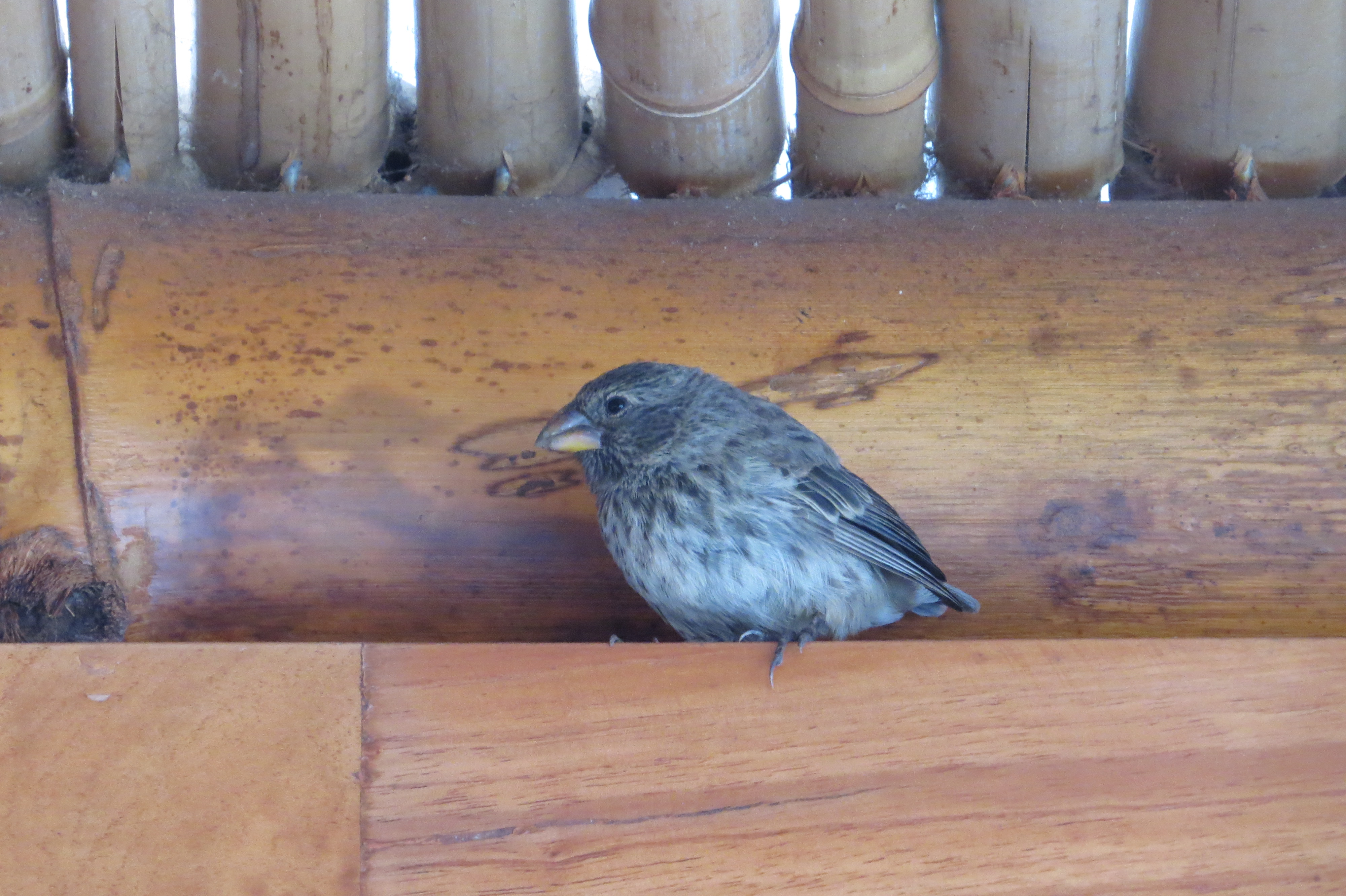
Isla Espanola is regarded as one of the more dramatic islands due to the cliffs on the southern end and due to relative isolation, the animals have different characteristics to those on other islands. We managed to spot a brown ground finch and Hood mockingbird are found nowhere else in the world.

Despite being late in the season there were a few groups of waved albatross which were nesting on the cliff tops, including a mum and an infant who were looking at us very intently while we were walking around. We were also lucky to see the Nazca boobies –  mothers and chicks and a magnificient Galapagos hawk flying overhead.

In the afternoon, we returned to Bahia Gardner; a picture postcard Galapagos beach of beautiful crystal clear waters, complete with sea lions basking in the sand. Although the sand was white and largely clear of shells and other debris; the large volcanic rocks halfway along the beach represented the limits of our access. Some of our group unknowingly wandered into the wrong area, leading to the zodiac being called from the main boat offshore to bring them in and the inclusion of the incident into the guide’s report.

The afternoon snorkelling was off Isla Espanola, where we experienced a large male sea lion chase and take a cheeky nip on the arm of our group. Watching a sea lion playing underwater was a truly special moment, the way they are able to spin around near the bottom of the sea and quickly rise and turnaround was a moment that I will not forget easily. We were also lucky to three sea turtles which were elegant as they swam close to the seaweed near the bottom of the sea. Swimming close to the cliffs and a number of caves also changed the types of fish and creatures that we saw.

One of the amazing things about sailing on the Galapagos is how the wildlife seem to follow the boat, whether it is sea turtle, a sea lion or a group of frigate birds they love to take advantage of the free ride of a current or food.

Travel date: 28 December 2018
Ecuador: Galapagos Islands – Isla Baltra

Isla Baltra, is a separate island off the north east coast of Isla Santa Cruz and houses the modern airport. The airport was built with environmental disciplines in mind, without air-conditioning, a moving passenger baggage belt and has several wind turbines in front of the airport to generate the electricity needed.

Travelling around Isla Baltra on the boat, we were accompanied by a group of frigate birds and a blue-footed booby who seemed to enjoy the drafts created by the boat and would weave in and out of the drafts as they soared high above us.

The snorkelling at Punta Carrion (Itabaca channel) between Baltra and Santa Cruz was quite amazing. Even though I hadn’t snorkelled for about 18 months and we were snorkelling in deep water, it was actually easy once I remembered how to breath with a snorkel.

The volcanic rocks where we were snorkelling made for lots of crevices for thee fish to play hide and seek. We managed to see a white tipped reef shark, lots of surgeon fish, wrasses, parrot fish, pelican and sally lightfoot crabs. And a lazy sea lion who had decided that the bow of a barge was a good resting place.

Travel date: 23 December 2018

Ecuador: Galapagos Islands – Isla Isabela

Upon landing at Las Tintoreras near Isla Isabela; we were greeted by a marine iguana resting on the rock catching the first rays of the sun just after 6.30 am. There wer many marine iguanas clinging to the rocks and they varied in size from about 10 cm to over a metre including length of their tail. The recommended 2 metre rule from the wildlife was sometimes a challenging one to follow when they would be suddenly be on the path in front of you. We also came across a group of sea lions who were taking advantage of the shade in the mangroves to have a rest.

Low tide and the churning sands made the snorkelling off Puerto Villamil a larger challenge than anticipated. The image that I had in my head of walking off the beach till the depth that I could just push-off and snorkel did not take into account the number of large and small volcanic rocks and the waves that kept pushing you back onto shore. Watching a pelican catch fish in front of my eyes and diving blue-footed boobies made up for the disappointing snorkelling. Observing how territorial sea lions are about the benches by the beach was quite entertaining, getting too close to them would result in a strong hiss at the offending human.

The visit to the Arnoldo Tupiza Giant Tortoise breeding centre was very interesting, they keep the giant tortoises by sub-species according to the island they come from and aim to replicate the conditions on their home island by varying the vegetation and amount of shade. To replicate the conditions in the wild, the tortoises are only fed every 4 – 5 days, leading to fighting frenzy where the small tortoises would climb over others to get the food. The slow lumbering gait of the giant tortoises across the courtyards with the human paparazzi looking on was certainly a sight.

The broadwalk along Pozo Vilamail, was our first chance to see pink flamingos who were feeding in the shallows of the lagoon. While the flamingos are solitary animals, we spotted with ducks swimming around them. We managed to see 4 of the 314 flamingos in the Galapagos; which was a great for a short walk.

We were lucky enough to get a large turkey for the Christmas Eve dinner which had an Ecuadorian twist from the tree tomatoes which were also part of the meal. There was a touch of the festive spirit with a small Christmas tree and an Ecuadorian nativity scene from a couple of fellow passengers.

Travel date: 24 December 2018
Ecuador: The Journey to the Galapagos Islands

Although, the physical journey started on the 19 December 2018, the destination had been a dream for many years since I visited Darwin’s House (Down House) in Kent, England. The idea that a group of islands and animals of these islands could change the course of science meant that it would be dream destination.  Although I wanted to be the first of my family to make it here, the photos and stories of my brother and sis-in-law and my travelling buddy increased its order of importance in the ever-increasing travel list.

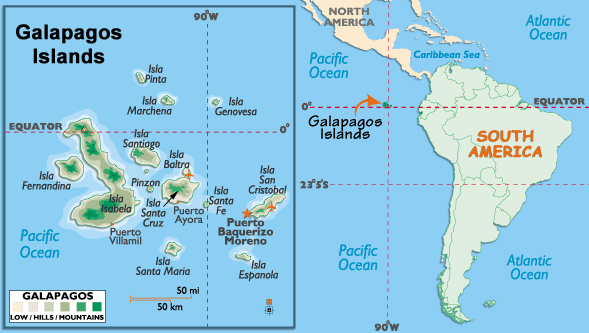
Galapagos-islands-map

After a frantic early morning of finalising work, I made it to Sydney international airport, along with what felt like half of Sydney who were all going on away for Christmas on the same day. After a civilised lunch with a celebratory glass of bubbly for Linda’s birthday, we boarded the flight for what would be the longest day ever…. The 12.5 hour flight (excluding what now seems to be obligatory delay at Sydney airport) left at 12:50 Sydney time and got us to Santiago airport at 11:10 am on the same day… the wonders of a crossing the international deadline.

The Chilean surprise that greets all Australian is a reciprocal entry fee of 117 USD for the privilege of entering the country. While steep for an overnight stay, it appears to last for the life of the passport. With a 5.30 am flight the next day, the airport hotel seemed to be the most sensible option when we were planning, and luckily it was. Somehow we managed to delay the jet lag and lunch to have a single meal at 6 pm, ready to wake up at 2.30 am.

Santiago airport at 3.30 am was a sea of humanity all queuing up to go somewhere with lots of luggage, wrapped large Christmas presents, new TVs. Confusion about lines, automated vs. manual check-ins and poor signage meant that we were unexpectedly ushered to a separate queue. Unlike other airports, clearing customs was the lengthy process with the custom officials rather than an automated passport screening machine while bag screening was a smooth and seamless process.

After a 4 hour flight, and a 2 hour time change, we landed in Lima with a 4.5 hour stopover. Without access to a lounge, we lasted till about 10 am until we sat down for an early lunch. After a 2 hour 20 minute flight we finally landed in Quito, Ecuador for a couple of days to explore the city.

The final Ecuadorian flight, started with a 3.30 am pick-up for a 5.30 am flight, after a minor quarantine incident where my passionfruit was confiscated while the rest of the group’s apples were passed through without a problem; we finally took off for Isla Baltra, one of the Galapagos airports.

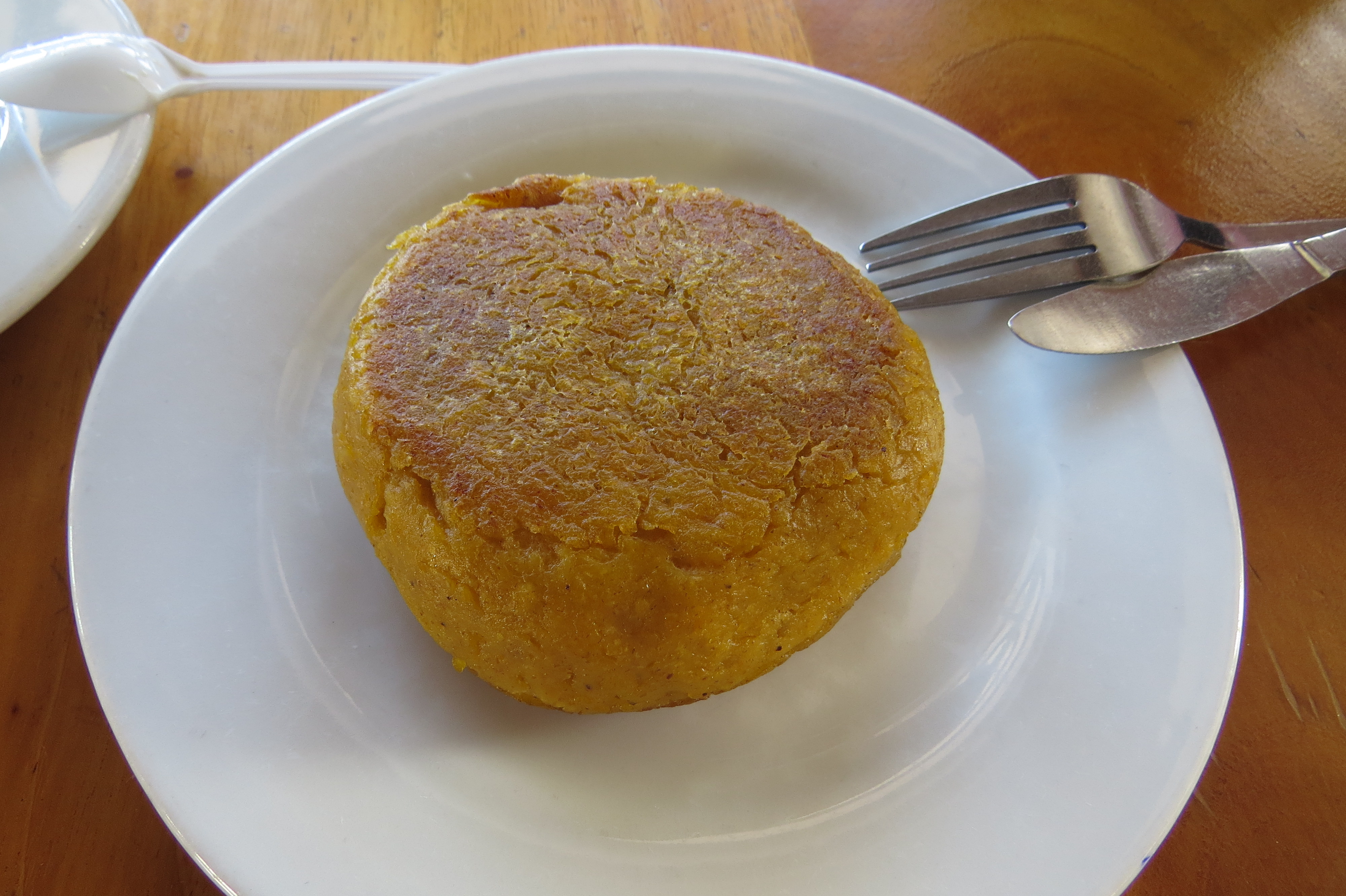
Upon arrival at Baltra airport while our luggage was subjected to a canine inspection we were required to pay 100 USD for to the National Park and 20 USD for a transfer fee. Having left earlier than normal, we had a long wait for our guide to drop the previous group of passengers off and pick us up. A welcome coffee, a typical Ecuadorian snack of Huminta and the intermittent phone/wi-fi signal was how we spent the next 2.5 hours. The highlight of the wait was the warning signs not to feed the Darwin finches and spying on the food choices of the airport staff.

Eventually our guide Alexis met us for the bus transfer to the boat jetty. Despite the boat shelter being in the middle of construction, we still managed to spot some sally lightfoot crabs, a sea lion and a pelican from the jetty.

Finally our panga (zodiac) came to collect us for the short ride to the boat. Once on board, we were lucky enough to have our fourth and final “breakfast” of the day…. To be quickly followed by lunch 1.5 hours later….. And so the holiday begins 🙂

Travel date: December 2018

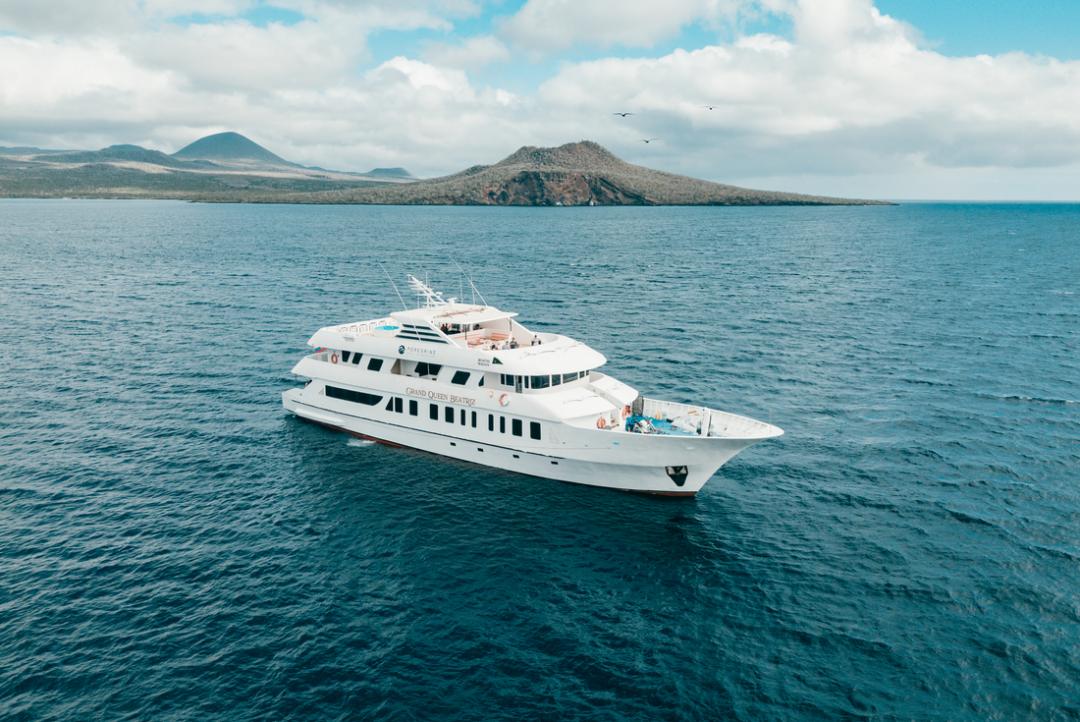
Grand Queen Beatriz.jpg